
From 2013 to 2022, Italy shows a fluctuating trend in citizenship acquisitions, with a notable peak in 2016 and a sharp rise again in 2022, reaching over 213,000. Spain, after a drop in 2015, also shows a significant rebound from 2017 onward, peaking in 2022 with 181,581. Germany maintains a relatively stable trend with consistent growth, surpassing 166,000 in 2022. France as well exhibits a more stable and moderate trend with smaller fluctuations, maintaining citizenship grants around the 100,000 mark throughout the period, with a notable dip in 2020.

The data reveal a notable share of citizenships in Germany, Spain, France, and Italy awarded to individuals from non-EU/EFTA and EU candidate countries.
In 2022, Germany granted 63.5%, Spain 92.8%, France 83.3% and Italy 62.7%.
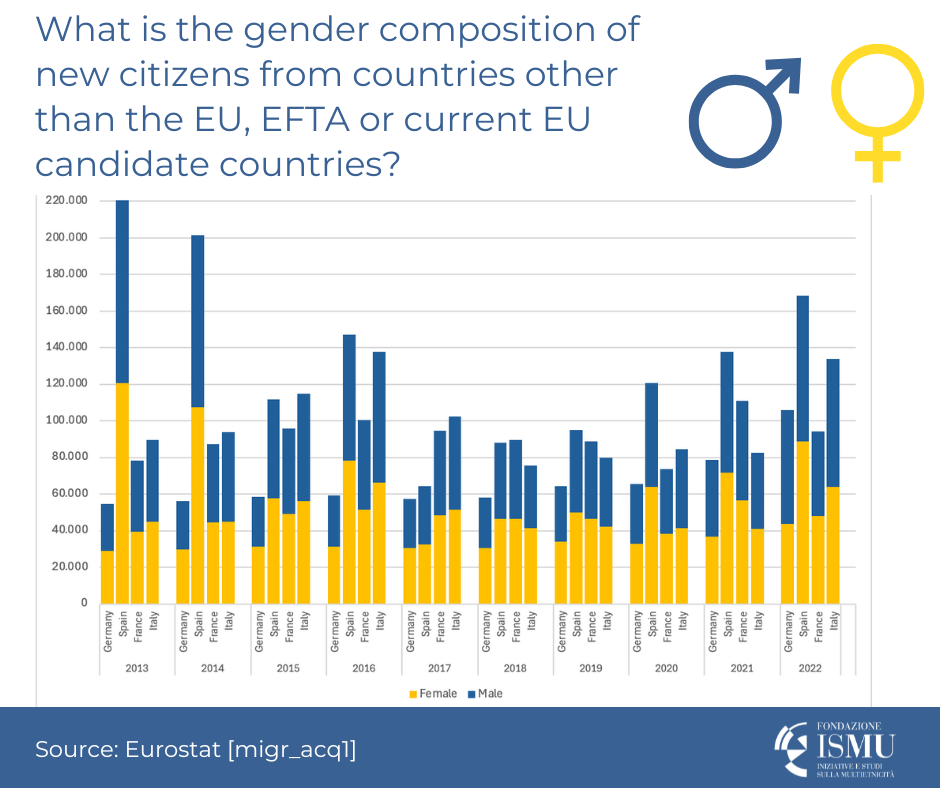
Spain grants the largest number of citizenships, peaking at 222,185 in 2013 with a female share of 54.3% and remaining above 50% in subsequent years. Germany and Italy show a gradual increase in the total number of citizenships granted, reflecting, however, a lower percentage of women in recent years than in the past. France maintains a relatively balanced gender distribution and a constant number of citizenships granted over time.
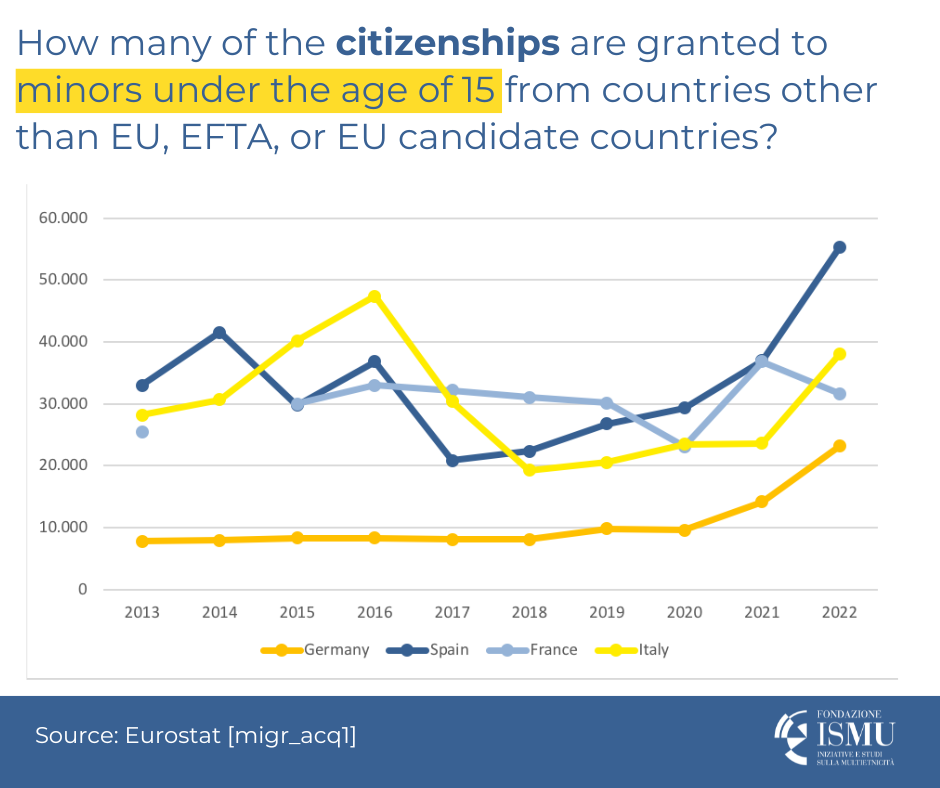
From 2013 to 2022, the acquisition of citizenships for minors under 15 years old presents varying trends across the four countries. In comparing the states, Spain consistently ranks highest in citizenship acquisitions, with a sharp rise to 55,243 in 2022, maintaining its lead throughout the decade despite some fluctuations. France holds a stable second position, peaking at 36,796 in 2021 but slightly dropping to 31,609 in 2022. Italy follows closely, starting lower but showing steady growth, particularly in 2022 with 38,045 acquisitions, overtaking France in that year. Germany ranks last for the period but experiences a significant rise by 2022, reaching 23,170, marking notable growth but still behind the other three countries.
There is an emerging body of literature that examines the effect of acquiring host country citizenship on the educational achievement of second-generation children as a primary indicator of their life opportunities in host societies.
These studies suggest that host country citizenship positively affects educational performance, both at early and later stages of students’ educational trajectories, which might explain the importance of the trends shown here for these four countries.
ISMU ETS as well, in its report “Alunni con background migratorio. Generazioni competenti”, delves into and highlights the talents and skills that distinguish students with a migrant background, which are crucial for their academic and personal success, as well as for the development of the communities where they grow up. The importance of educational alliances among families, schools, communities, local authorities, and third-sector organizations is addressed in the report “Alunni con background migratorio in Italia. Famiglia, scuola, società.
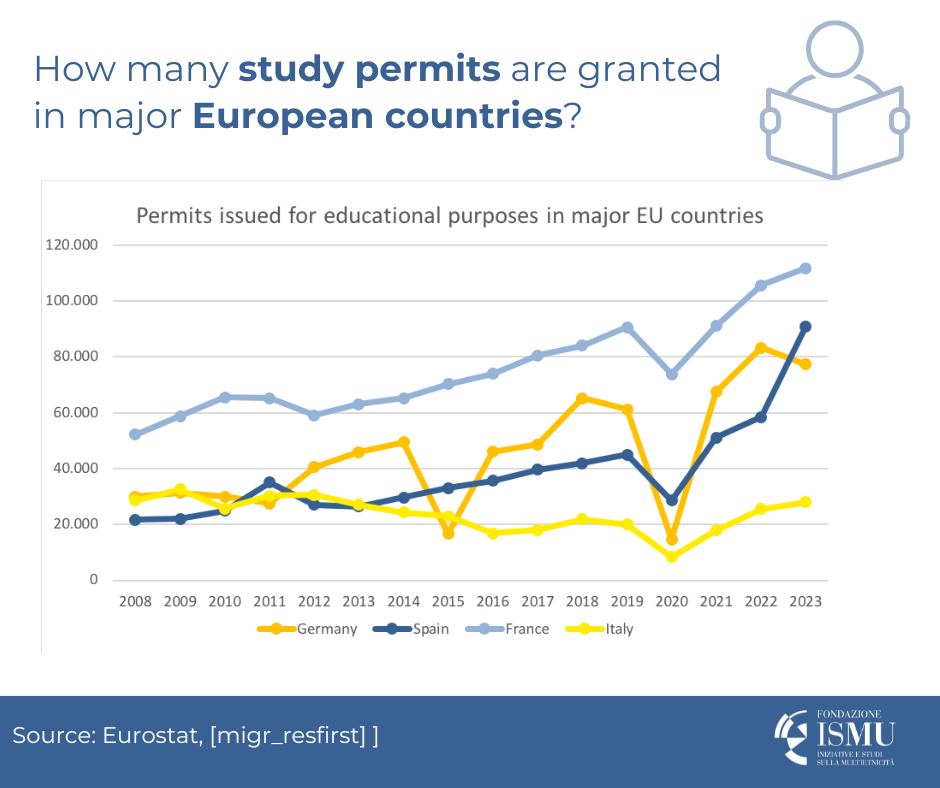
Between 2008 and 2023, France consistently issued the highest number of temporary permits for educational reasons among the four countries, peaking at 111,750 in 2023. Spain experienced significant fluctuations but saw a sharp increase to 88,673 permits in 2023, indicating recent growth. Germany showed a fluctuating pattern with notable dips in 2015 and 2020 but demonstrated a clear upward trend in later years, reaching 83,215 permits in 2022 before a slight decline in 2023. Italy maintained lower and more stable figures throughout the period, peaking at 27,666 permits in 2023. Overall, while France leads in permit issuance, Spain and Germany have shown notable increases recently, especially after the common post COVID_19 dip, whereas Italy’s numbers remain relatively steady.
Milan, November 18, 2024